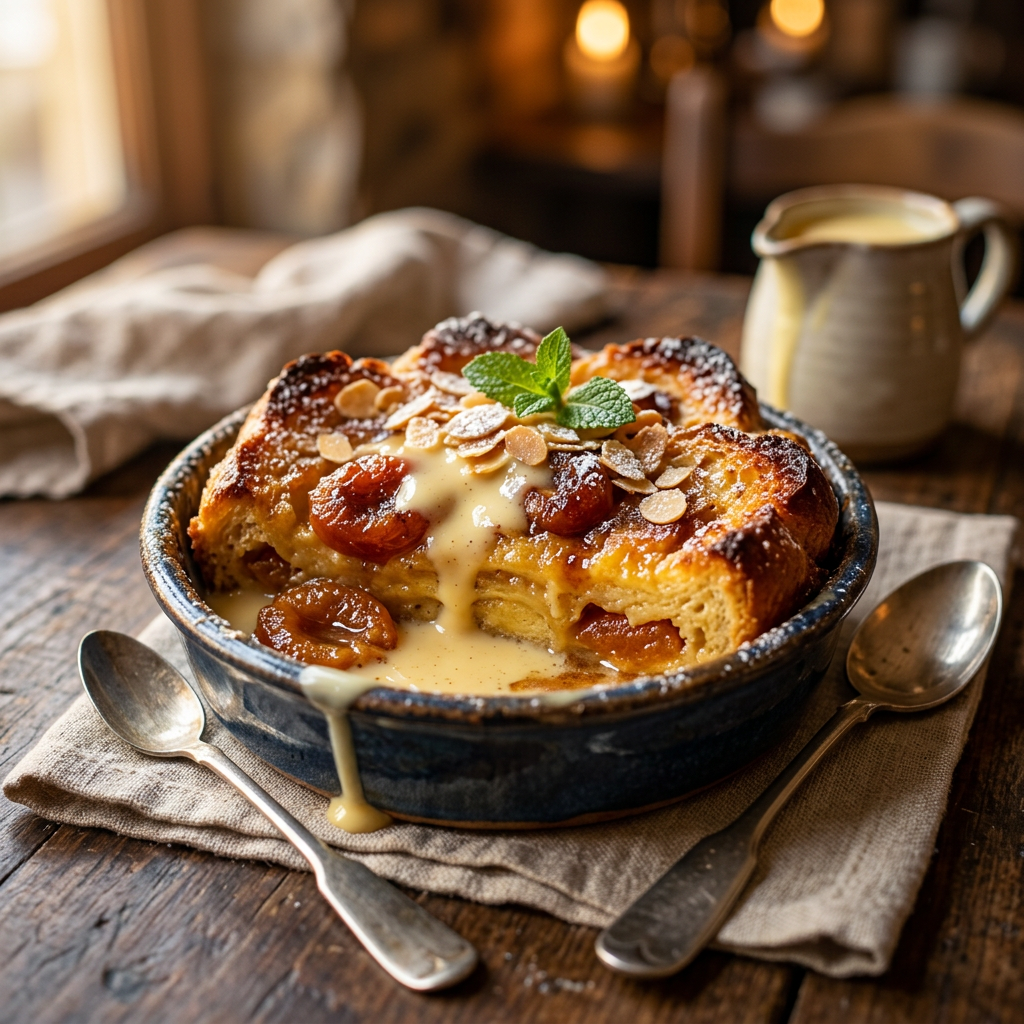
Traditional Apricot Bread and Butter Pudding
A classic South African comfort dessert made with layers of buttered bread and sweet apricot jam soaked in creamy custard.
Origin & History
This dish is a staple in many South African households, often served after Sunday lunch as a nostalgic treat.
Ingredients
- 8 slices white bread
- 50g softened butter
- 1/2 cup smooth apricot jam🇬🇧 UK tip:Available at most UK supermarkets (Tesco, Sainsbury's, Waitrose) in the jam aisle
- 3 large eggs
- 2 cups full cream milk
- 1/2 cup white sugar
- 1 tsp vanilla essence
- 1/2 tsp ground cinnamon
Method
- 1
Butter the bread slices and spread a generous layer of apricot jam on one side.
- 2
Cut the bread into triangles and layer them jam-side up in a greased baking dish.
- 3
In a bowl, whisk the eggs, milk, sugar, and vanilla essence together until well combined.
- 4
Pour the custard mixture over the bread and let it soak for 20 minutes.
- 5
Sprinkle with cinnamon and bake at 180C for 35 minutes until the top is golden and the custard is set.
Top Tips
- Use day-old bread to ensure it absorbs the custard without falling apart|Serve warm with a side of custard or vanilla ice cream|You can add a handful of raisins between layers for extra texture
Serve with
Traditionally paired with other South African classics:
Community Kitchen
Every South African family has their own version of this recipe — small tweaks passed down through generations. Do you make yours differently? Share your family variation with the community.
Free email · no account needed
Recipes, braai days and match days — in one email
New South African recipes, SA events near you and every Springboks, Proteas and Bafana fixture with the UK channel. Free.
Email only, unsubscribe any time. Privacy notice
Analytics
We'd like to use Google Analytics to count visits and see which pages get read. It stores an ID on your device. Say no and the site works exactly the same — nothing here affects signing in, the match-day poll or the newsletter, which don't need your permission because they only do what you asked for.
You can change this any time on our cookies and storage page.